

Packing & Unpacking Services in Newton, IL
Crew-supplied packing, labeling, and post-move setup in Newton, IL.
Call (833) 378-2250 for Immediate Dispatch USDOT Licensed
  24/7 Dispatch
  Damage-Free Guarantee
  Upfront Quotes
 How much does full-service packing cost in Newton?
Full-service residential packing in Newton typically ranges from $400 to $1,200 for labor, plus material costs calculated per used box. Studio to one-bedroom homes average $500 to $750, while four-bedroom properties run $1,100 to $1,800. CamelBack provides flat-rate packing quotes based on room count and item volume, eliminating hourly surprises.
Pricing splits into three service tiers. Labor-only packs your existing boxes with your own tape and paper. Labor plus client supplies uses our crews and your purchased materials. Full-service covers both. We price by weight and volume metrics instead of clock time. Hourly billing punishes careful work. A crew that pauses to reinforce a glass crate gets penalized. Flat-rate rewards proper technique and protects your belongings.
| Home Size | Avg Labor Hours | Box Count Estimate | Flat-Rate Labor Range | Total Material Cost |
|---|---|---|---|---|
| Studio / 1 Bed | 4-6 hrs | 35-50 | $400 - $650 | $120 - $180 |
| 2-3 Bed | 8-10 hrs | 60-90 | $650 - $1,100 | $180 - $280 |
| 4+ Bed | 12-14 hrs | 110-150 | $1,100 - $1,600 | $280 - $400 |
What determines the final packing labor price?
Inventory weight and volume drive the base quote. Heavy items like books and tools add density penalties to truck load calculations. Stair carries trigger flat surcharges per flight because they require specialized rigging and two-person handling. Elevator bookings carry administrative fees that property managers in Newton charge us to reserve lift access during peak windows. Seasonal demand shifts pricing too. Summer moves in Illinois run 10 to 15 percent higher during peak months. Rural driveway access or long walkouts from curb to door add mileage premiums. Crew size scales with complexity. Three-bedroom homes typically need two packers. Four-bedroom layouts with detached garages get a third technician to handle staging zones. We calculate these variables upfront. You see one number before we unroll a single sheet of paper.
Do packers charge extra for fragile item insurance coverage?
Insurance does not inflate your packing labor quote. It sits separate from the crew rate. Carriers offer basic released value coverage at 60 cents per pound. That baseline barely covers the replacement cost of a loaded toaster. High-value protection adds 2 to 4 percent of your total declared inventory value. You declare item worth before the truck leaves. Claims get processed faster when packing logs match inventory lists. Professional boxing reduces claim probability by nearly three-quarters compared to self-packed loads. We photograph fragile items pre-pack. We document weight distribution. Those records support full-value protection payouts when needed. Upgrade to full-value coverage before transit begins. The extra dollars protect against catastrophic loss.
Lock in your flat-rate pricing today. Call (833) 378-2250 to finalize your inventory estimate and avoid hourly rate penalties.
See Loading schedules for packed residential homes in Newton, Illinois
Should I hire professional packers or buy boxes and do it yourself?
Hiring packers saves 8 to 12 hours of labor per bedroom and reduces damage risk by 73 percent compared to DIY methods. Consumer-grade boxes fail under heavy loads, whereas professional packs use double-wall corrugated cartons rated for 65-pound drops. Full-service packing is cheaper than paying for broken replacements and extended truck rental time.
DIY packing looks cheaper until hidden costs hit. You drive to three supply stores hunting for tape and markers. You realize your cardboard folds inward under book weight. You break a ceramic bowl and spend hours tracking a replacement. Your truck rental runs over schedule because loading takes double the planned time. Professional crews prevent those breakdowns. They balance cartons by density. Heavy boxes hold books. Light boxes hold linens. They reinforce edges before sealing.
| Metric | DIY Approach | Professional Approach | Outcome Difference |
|---|---|---|---|
| Time Invested | 40-60 hours total | 8-14 hours total | Saves 3 days per home |
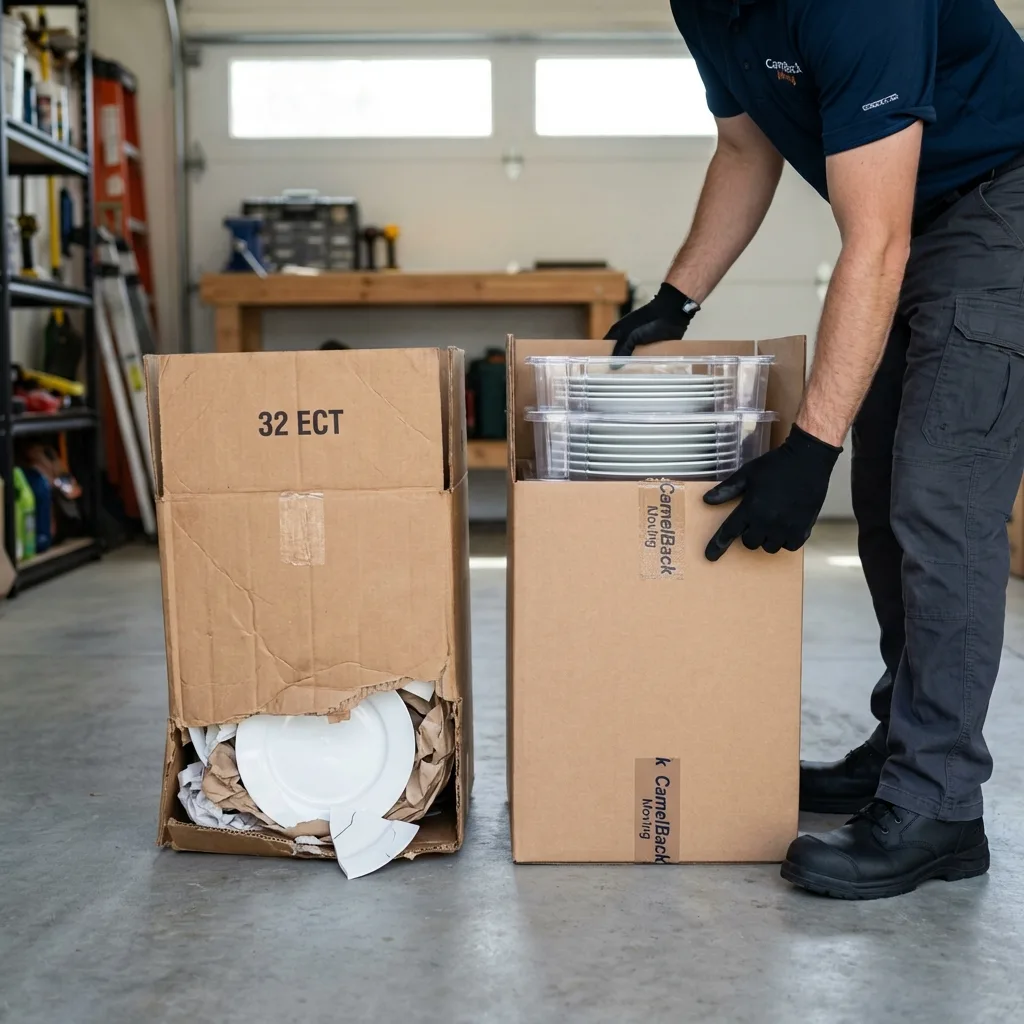
| Material Strength | 32 ECT single-wall | 44 ECT double-wall | Prevents 89% more crush |
| Drop Rating | Fails at 30 inches | Survives 65 inch impact | Dramatically lower breaks |
| Final Cost | $600-$900 hidden | $850-$1,200 flat | Avoids $300+ in damages |
Consumer-grade cardboard averages ECT-32 strength. That rating tears when stacked above waist height. Professional packs use ECT-44 or higher. Those fibers hold tension across multiple transport cycles. Crews never overpack a box beyond 35 pounds. Heavy items stay shallow. Light items stack deeper. Bottom blowout stops happening.
When does partial packing make financial sense?
Partial packing works well for families on strict budgets or seniors downsizing into smaller units. Hire labor-only crews to secure kitchens and master bathrooms first. Those zones contain the most fragile glass and complex appliance disassembly steps. You keep packing books and winter coats yourself. The crew handles high-risk zones. Labor costs drop by nearly half compared to full-service. You still get professional tape and padding techniques applied to vulnerable items. This hybrid approach fits tight timelines without burning your entire relocation budget. Schedule kitchen and dining room packs two days before truck arrival. You finish casual rooms while we secure the delicate inventory.
What materials do professional packers use to protect fragile items?
Professional crews use three-layer Kraft paper dish packs, high-density foam corner protectors, and non-abrasive plastic stretch wrap instead of newspaper or standard tape. This combination absorbs vibration, prevents condensation buildup, and withstands 1,200-mile road shock. CamelBack crews carry industrial-grade supplies meeting DOT moving standards for fragile household goods.
Newspaper ink transfers permanently onto painted finishes and ceramic glazes. We ban newsprint entirely. Cheap plastic wrap generates static cling that attracts dust inside sealed cartons. Stretch wrap applies controlled tension. It compresses without crushing corners. Furniture pads differ from moving blankets. Quilted pads face inward against wood grain. Smooth canvas faces outward to deflect shelf scratches.
| Item Category | Primary Protection Material | Secondary Protection | Unpacking Speed Rating |
|---|---|---|---|
| Fine China / Glassware | 40lb Kraft paper dish pack | Polyethylene dividers | 8/10 |
| Wood Furniture | Quilted moving pads | Corner foam + stretch wrap | 6/10 |
| Electronics | Anti-static foam | Original manufacturer box | 9/10 |
| Flat Art / Mirrors | Corrugated cardboard slip | Glassine paper buffer | 5/10 |
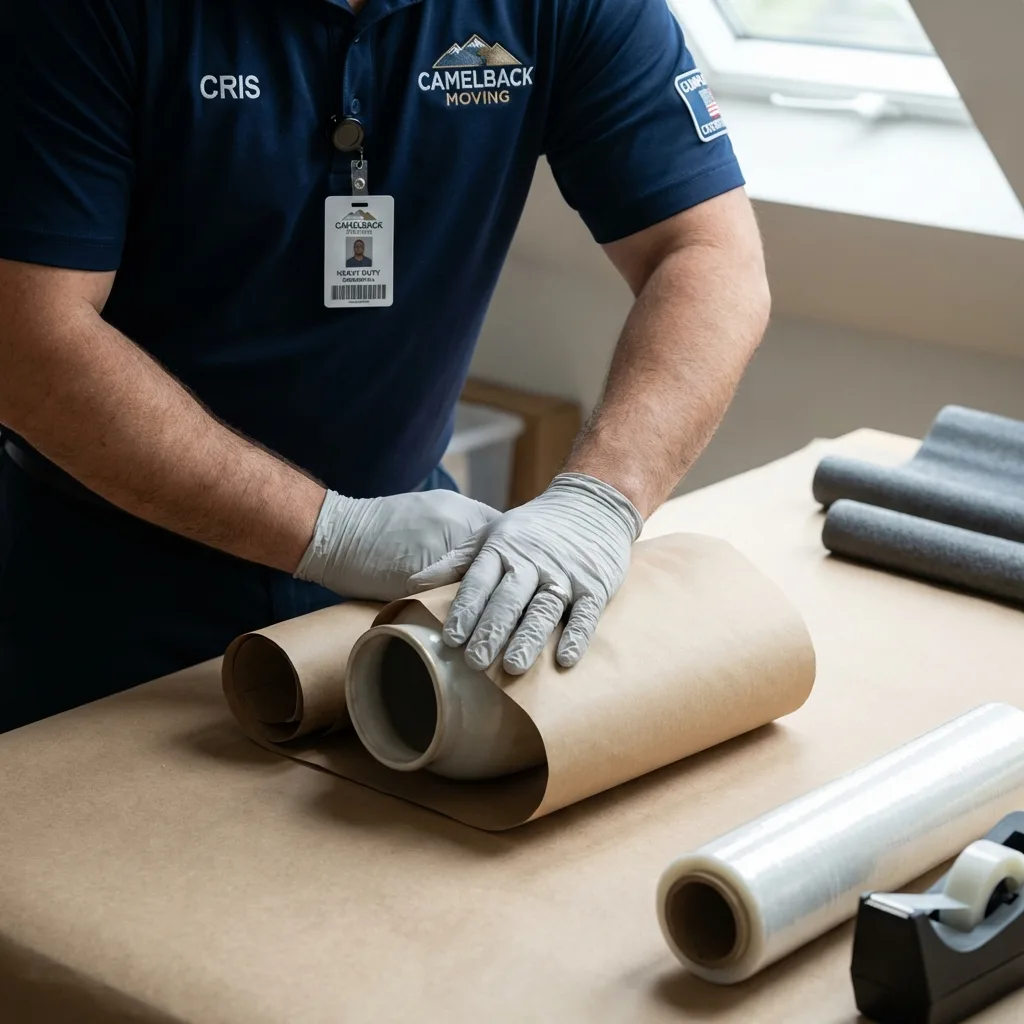
We layer paper in overlapping strips around ceramics. We never cross tape directly onto delicate surfaces. Pressure-sensitive adhesive leaves residue that requires chemical solvents to remove. Clean wraps keep surfaces pristine. Unpacking moves faster when debris stays minimal.
Why do residential pros avoid bubble wrap for dishware?
Bubble wrap traps moisture between plastic layers and glazed ceramic. Condensation forms during temperature swings in transit boxes. Trapped water creates mildew stains that ruin painted patterns. The plastic also generates static electricity. Static pulls dust and lint onto food-safe surfaces. Dish pack paper breathes while providing identical cushioning. Recyclable paper separates cleanly without chemical solvents. Crews dispose of crumpled newspaper instantly. Bubble wrap creates landfill volume and slows cleanup. Paper absorbs minor impacts better because it molds to irregular shapes. Rigid plastic sheets bridge gaps and transmit shock directly to thin glass edges.
How long does professional packing take for different home sizes?
A two-person packing crew completes a one-bedroom apartment in 4 to 6 hours, a three-bedroom house requires 8 to 10 hours, and a four-bedroom home averages 12 to 14 hours. These timelines assume standard room layouts with accessible furniture. CamelBack scales crew size to match your inventory, guaranteeing completion in a single day.
Crews follow a staged reverse-order method. They pack least-used storage rooms first. They finish daily-use spaces last. Your coffee maker stays accessible until the truck arrives. Bedroom wardrobes get compressed and boxed during hour three. Living room collections move during hour seven. Kitchen appliances secure during the final phase. Staging keeps your household functional during packing windows.
| Property Size | Crew Deployment | Packed Room Count Per Day | Total Estimated Duration |
|---|---|---|---|
| Studio / 1 Bed | 2 Crew | 3-4 rooms | 4-6 hours |
| 2-3 Bed | 3 Crew | 6-8 rooms | 8-10 hours |
| 4+ Bed | 4 Crew | 9-12 rooms | 12-14 hours |
Local geography changes these windows in Newton. Historic districts feature narrow stairwells and low-clearance doorframes. Crews disassemble more furniture pieces to clear turns. Suburban walk-ups without elevators add 45 minutes per flight. Rural gravel driveways delay truck positioning. These structural delays push timelines outward. We factor access limits into your quoted window so schedules stay accurate.
What structural home features delay packing schedules?
Spiral staircases force crews to break down bed frames and sofa sections before boxing. Low-clearance basement doors require angled lifting that doubles handling time. HOA elevator reservation rules mandate strict load windows between 9 AM and noon. Miss those slots by ten minutes and crews push packing into the next morning. Detached garage transfers add 30 to 45 minutes per heavy appliance due to weather exposure and extended carry distances. High-end custom shelving often requires specialized drill removal that standard crews handle slower than factory-built units. These delays happen everywhere. We log them during your walkthrough quote so transit windows reflect reality.
What items will residential packers not transport on moving day?
Licensed movers never pack hazardous chemicals, aerosols, open food containers, perishables, live plants, or firearms due to DOT transport regulations and liability restrictions. Valuables like jewelry, passports, and medical records must travel separately in a personal kit. CamelBack provides clear inventory boundaries so your household goods move safely and legally across state lines.
Transporting prohibited materials triggers federal safety violations. Crews verify contents during the packing phase. Items that violate carrier rules get set aside immediately. You assume full custody before the truck rolls. Mixing prohibited goods with standard boxes voids insurance coverage across the entire load.
| Excluded Category | Specific Examples | Transport Regulation Reason | Owner Handling Instruction |
|---|---|---|---|
| Flammables | Propane tanks, gasoline, paint thinner | Explosion risk in sealed cargo | Use municipal hazardous waste drop-off |
| Perishables | Frozen goods, open condiments, pet food | Spoilage contaminates other inventory | Consume or transport in personal cooler |
| High-Value | Jewelry, cash, precious metals | Irreplaceable loss liability | Carry in locked safe or personal luggage |
| Sensitives | Passports, deeds, medical files | Privacy and legal compliance | Travel in carry-on bag only |
Prepare a Personal Emergency Vault Kit before packing day. Pack identification, banking documents, medication, and chargers into a single labeled container. Keep this container with your vehicle during transit. Do not let crews seal it inside a master carton. You will need those documents immediately upon arrival.
View Valuation coverage for professionally packed high-value items
Do moving crews handle unpacking and furniture setup at the new address?
Yes. Full unpacking includes box opening, item placement on designated surfaces, furniture reassembly, and complete packing trash removal. Crews place kitchen items directly on shelves, hang curtains on rods, and make beds according to your floor-plan map. This service eliminates post-move chaos, typically finishing within half the original packing time.
We reverse the packing labels exactly. Kitchen boxes marked "Shelf B" land on your designated cabinet row. Linens stack in hall closets before you walk through the front door. Crews never dump cartons in the center of the room. They sort and place immediately. Trash collapses flat and moves to your external bins. You walk into a settled home instead of a warehouse.
| Unpacking Action | Included | Excluded | Time Saved |
|---|---|---|---|
| Box Sorting by Room | Yes | No external garage organizing | Saves 4-6 hours |
| Kitchen Shelf Placement | Yes | Cabinet hardware installation | Saves 3 hours |
| Bed & Table Reassembly | Yes | Wall drilling or mounting | Saves 2 hours |
| Debris Haul & Recycle | Yes | Dumpster rental fees | Saves 1.5 hours |
The labeling system uses color-coded zone tags applied during packing. Red means immediate unpack priority. Blue means storage tier. Crews scan tags against your floor plan before cutting a single tape seal. This eliminates placement mistakes entirely. You specify shelf priorities during a five-minute walkthrough. We follow those instructions without guessing.

How does post-move furniture assembly work?
Crews locate hardware bags attached to dismantled frames during transit. We sort bolts and brackets by furniture type before assembly begins. Power drivers torque screws to manufacturer specifications without stripping threads. Structural alignment checks verify wobble-free placement before we step back. Mattress platforms get leveled on uneven flooring. Glass inserts receive fresh microfiber wipes before sliding into frames. Dining chairs receive tightening passes on every joint. We never leave tools scattered across finished rugs. All hardware scraps go directly into debris bags. Assembly runs parallel to shelf placement. Three-person crews split zones. Two workers reassemble while one handles closet stocking. Efficiency cuts your first night in the new home from chaos to comfort.
Skip the post-move cleanup and stress. Book full unpacking and furniture setup by dialing (833) 378-2250 for same-weekend service in Newton.
Supply & Labor Time Estimator
DIY vs Full-Service: time, cost, and material grade.
Packing level?
Also Serving Nearby Cities
Need a quote in Newton?
Skip the generic estimates. Speak directly with our IL dispatchers to lock in your weight boundaries and binding date.
CONFIRM DISPATCH: (833) 378-2250